

Experts Warn Lab Leaks ‘Surprisingly Common’ After NIH Confirms Possible Exposure to Deadly Virus at Montana Lab
An employee at Rocky Mountain Laboratories in Montana was potentially exposed to Crimean-Congo hemorrhagic fever following a personal protective equipment breach in November 2025.

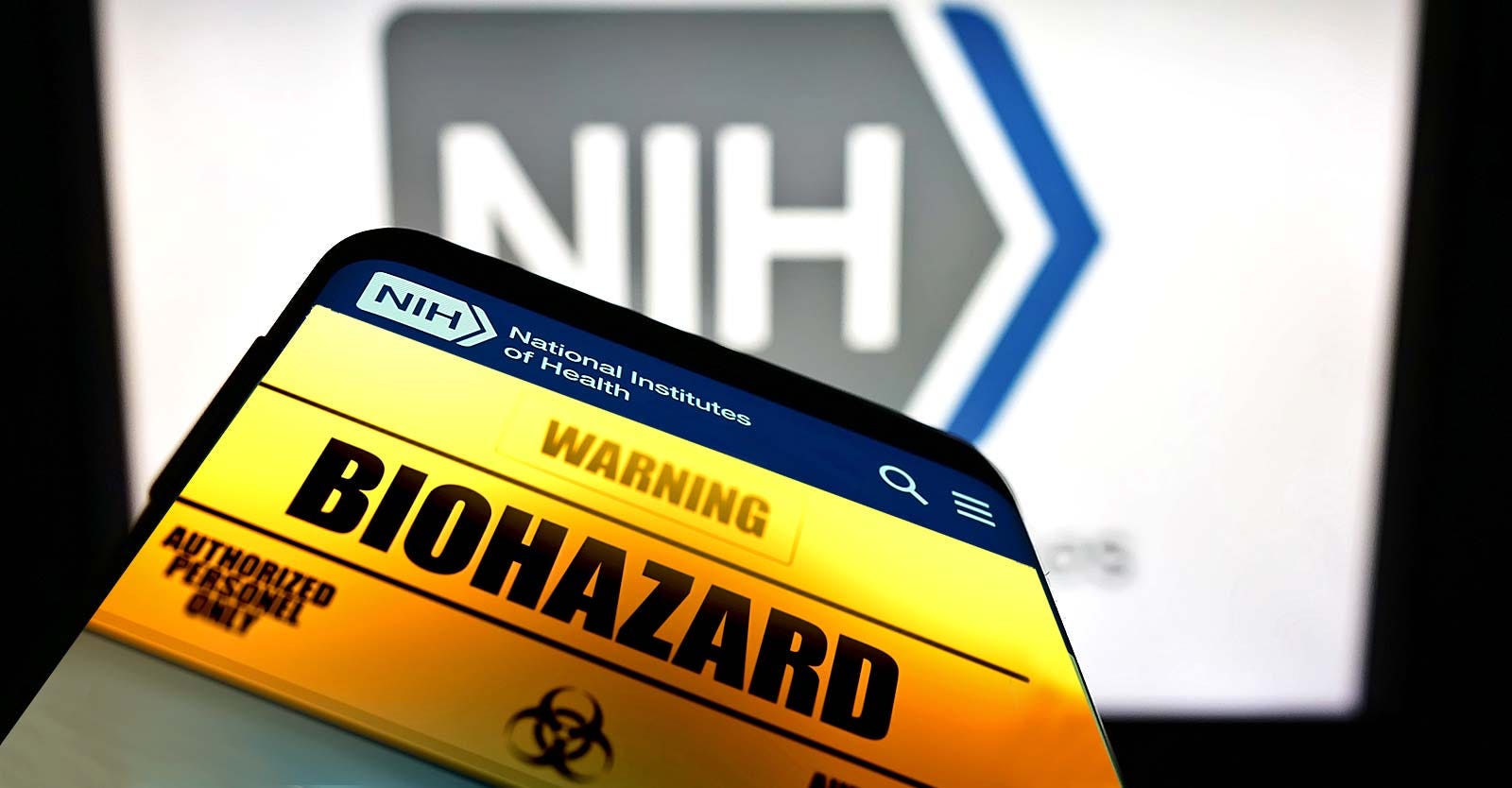
A Rocky Mountain Laboratories employee in Hamilton, Montana, may have been exposed to Crimean-Congo hemorrhagic fever (CCHF) in November 2025 after an accidental breach of personal protective equipment, according to the National Institutes of Health (NIH).
The incident was reported to NIH in February 2026, according to internal communications referenced in documents shared by White Coat Waste.
NIH officials said the employee did not become infected, and no transmission occurred.
“The employee was immediately isolated and monitored under appropriate care at a specialized medical facility before it was confirmed that no actual exposure or transmission had occurred,” NIH said in a statement. “At no time was there any risk to the public or to other staff.”
What is Crimean-Congo hemorrhagic fever?
CCHF is a rare but potentially fatal viral disease spread primarily through infected tick bites or contact with the blood and bodily fluids of infected animals or people, according to the Centers for Disease Control and Prevention (CDC).
The disease, which is most common in parts of Africa, Asia, the Middle East and Eastern and Southern Europe, can cause high fever, severe headache, vomiting, internal bleeding and hemorrhaging. The CDC reported that up to 50% of hospitalized patients may die from the illness.
The Food and Agriculture Organization of the United Nations said veterinarians and healthcare workers, and people who work closely with livestock, face an elevated risk of infection, while human-to-human transmission can occur through exposure to contaminated blood, medical equipment or bodily fluids.
There is no approved cure or available vaccine for CCHF, according to the World Health Organization.
Incident occurred at high-containment NIH lab
Rocky Mountain Laboratories, a Biosafety Level 4 (BSL-4) facility operated by NIH, conducts research on high-consequence infectious diseases, including tick-borne and emerging viral pathogens.
The facility is designed to study “confounding health issues, such as coronavirus, influenza, prion diseases, and antibiotic-resistant bacteria.”
It is part of the National Institute of Allergy and Infectious Diseases. It has historically focused on vector-borne and infectious conditions, including Lyme disease, Rocky Mountain spotted fever and other pathogens.
Lab leaks ‘surprisingly common’
Lab leaks involving dangerous pathogens occur more often than widely understood, according to some biosafety researchers.
Richard Ebright, Ph.D., a molecular biologist at Rutgers University in New Brunswick, New Jersey, said lab accidents that result in laboratory-acquired infections or releases are “surprisingly common.”
“The CCHF incident … was just one of an average of five such events that occur every week in the U.S., Canada and the U.K.,” he said.
The most recent available data reported to the Federal Select Agent Program in 2022 shows that 143 laboratory releases resulted in occupational exposure.
Dr. William Schaffner, an infectious disease specialist and professor at Vanderbilt University Medical Center in Nashville, Tennessee, said these types of dangers are treated with vigilance.
“When there is a leak there is a response,” he said. “The general track record is an affirmation that this system is working around the world.”
‘Not mandatory’ to report all leaks
Oversight of high-containment biological research laboratories in the U.S., however, remains fragmented, without a centralized federal system to track all laboratory incidents across agencies and institutions.
“There is no national database because it’s not mandatory to report all leaks,” said Alina Chan, Ph.D., a vector and genetic engineering specialist.
Researcher Shayna Korol, writing in the Bulletin of the Atomic Scientists, stated that BSL-3 and BSL-4 laboratories operate under rigorous rules.
However, reporting of accidents, exposures and potential containment breaches in the U.S. has “no federal accounting of incidents” beyond a narrow set of regulated pathogens and “no official registry” for many high-containment laboratories.
Korol’s analysis contrasted the U.S. system with Canada’s centralized Laboratory Incident Notification Canada program, which requires mandatory national reporting of biosafety incidents. She warned that inconsistent documentation and oversight can hinder transparency, risk assessment and coordinated responses to potential lab leaks.

‘Continual improvement’ needed
A 2024 scoping review in The Lancet documented 309 lab-acquired infections involving 51 pathogens and 16 reported accidental pathogen escape incidents between 2000 and 2021.
The authors concluded that “continual improvement” in biosafety management and reporting standards is essential, noting that underreporting and inconsistent oversight likely obscure the true scale of the problem.
Researchers said stronger reporting systems and root-cause investigations are necessary to reduce future incidents and improve laboratory accountability worldwide.
In the paper, “Epidemiological indicators of accidental laboratory-origin outbreaks,” researchers reviewed decades of laboratory-associated outbreaks and warned that accidental pathogen releases remain an ongoing global risk.
The authors wrote that “the question is not if a pathogen will escape, but rather which pathogen will and what measures are in place to contain an escape with serious consequences.”
Related articles in The Defender
I’m shocked and disappointed that CHD is publishing bioweapon fear porn instead of letting everyone know what Bobby did on the Friday evening before Memorial Day weekend (avoiding all news cycles): https://x.com/SecKennedy/status/2057939697091969518?s=20
Singing a PREP Act emergency declaration for hantavirus - a direct assault on the constitutional rights, health freedom and bodily autonomy of every US citizen.
Protect people from MEVI: the Massive Epidemic of “Vaccine” Injuries, with heavy metals injected.
MEVI is population-wide toxic metals poisoning due to Aluminum and Mercury, sprayed from the sky and injected as “vaccines.” Heavy metals are cumulative and cross the blood-brain barrier with its breakdown by petrochemicals.
In the U.S. alone, 1.4 million children are sickened by “vaccines” each year.
40% of all children have “vaccine”-induced chronic conditions.
70% of chronic conditions are “vaccine” injuries.
http://mevi.org/